Technical SEO Services to Fix Crawling, Speed, and Indexing
Pages can struggle to rank when search engines cannot crawl, index, or load them properly. Our technical SEO services find those site issues and fix them. We also check that search and AI crawlers can reach the content you want found.
What Our Technical SEO Services Cover
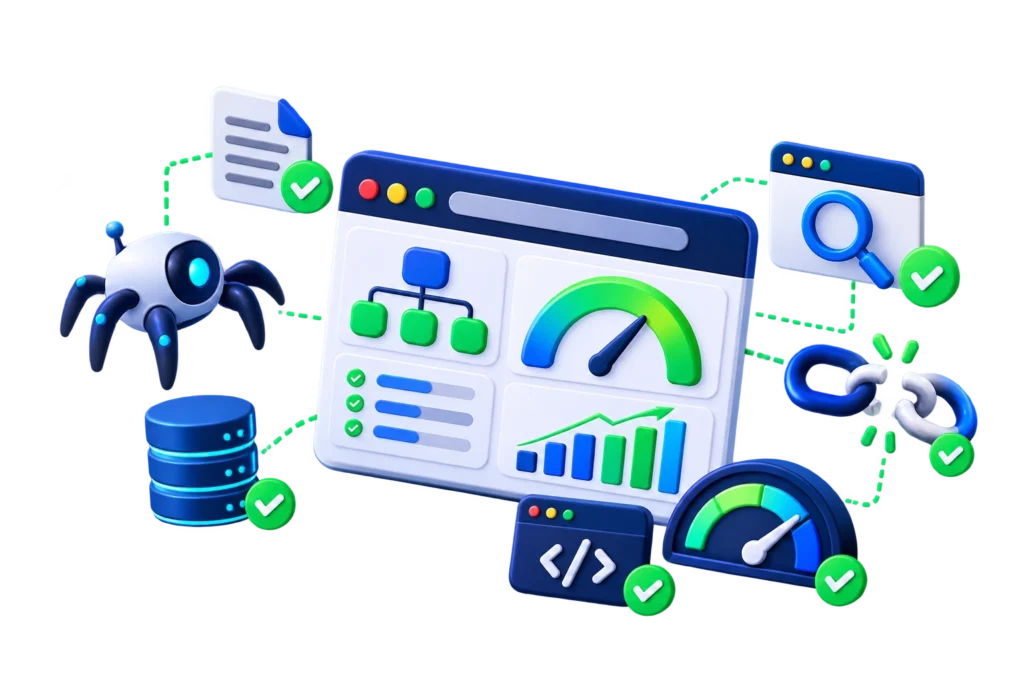
We fix six technical areas that decide how search engines reach and read your site.
Crawl and Index Repairs
Unintended crawl blocks, XML sitemap issues, incorrect noindex tags, and crawl errors all get fixed. This helps Google access your important pages and resolves technical barriers to indexing.
Core Web Vitals and Speed
LCP, INP, and CLS problems each have different causes. We investigate first, then fix what the data points to, such as slow servers, heavy scripts, or layout shifts.
Redirects and Canonicals
Broken links and redirect chains get repaired. We also review canonical tags and duplicate URLs to help search engines identify the preferred version of each page.
Site Structure and URLs
Page depth, grouping, and URL structure shape how crawlers move through your site. We review all three so key pages stay easy for crawlers and visitors to reach.
Mobile Experience
Google mostly uses the mobile version of your site for indexing. We fix layout, tap targets, and speed problems so pages work well on small screens.
Crawler and Bot Access
Not every crawler needs the same access. We review robots.txt rules for Googlebot and relevant AI crawlers. Then we help configure preferences for supported bots, based on your goals.
Signs You Need Technical SEO Help
Some problems point straight to technical causes. If you see any of these, your site is worth checking.
- Search Console reports excluded pages, crawl errors, or indexing problems.
- New pages take a long time to appear in Google.
- Core Web Vitals show as poor or needing improvement in reports.
- Redirects, duplicate URLs, or broken links pile up after site changes.
If the cause is still unclear, a full SEO audit can look beyond technical issues.
Core Web Vitals Scores We Aim For
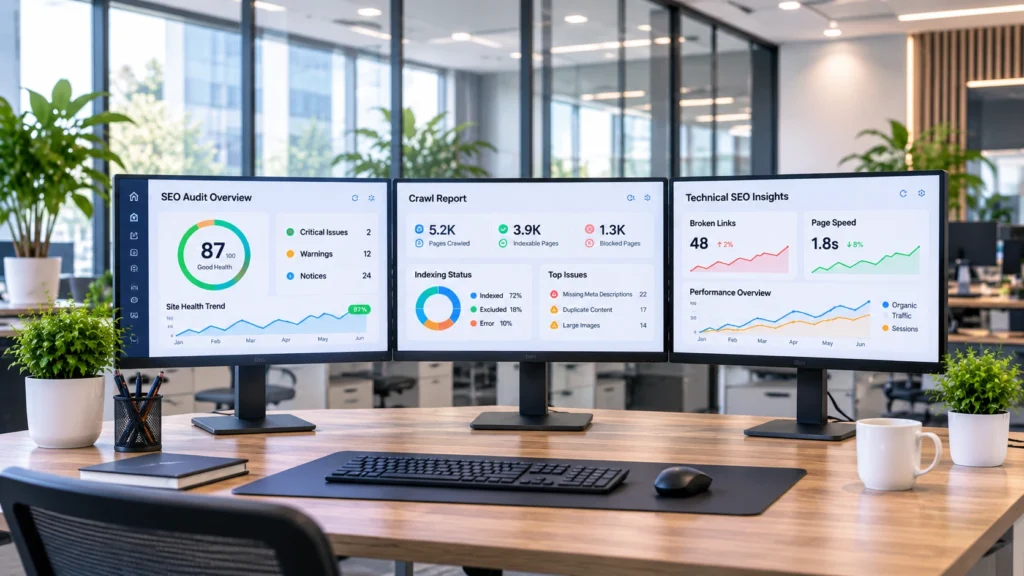
Google defines good thresholds for each Core Web Vital. We use these targets to guide optimization, based on the issues found on your site.
| Metric | What it measures | Good score |
|---|---|---|
| LCP (Largest Contentful Paint) | Loading speed | 2.5 seconds or less |
| INP (Interaction to Next Paint) | Responsiveness | 200 milliseconds or less |
| CLS (Cumulative Layout Shift) | Visual stability | 0.1 or less |
Core Web Vitals field assessments use real-user data collected over a rolling 28-day period. After fixes, it can take time for updated performance data to reflect the changes.
Reports and Records You Get
What you receive depends on the work we agree on.
- Baseline report: crawl, indexing, and Core Web Vitals status before any changes, so progress can be measured.
- Fix log: each change made, with the affected URLs and the date it went live.
- Developer instructions: step-by-step guidance for changes your team applies, where we do not have site access.
- Technical health report: crawl, indexing, and speed trends over time, where reporting is agreed.
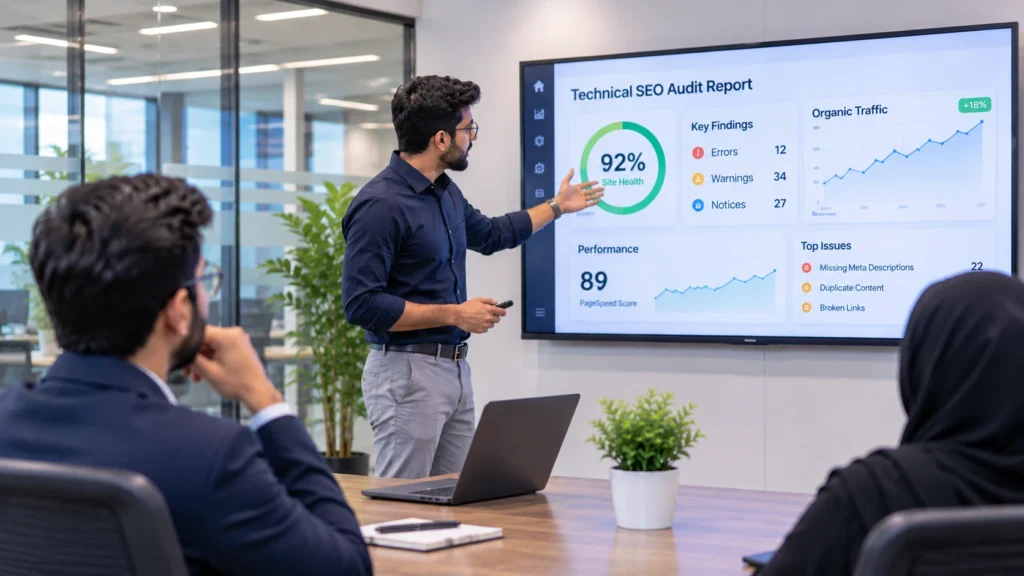
Common Mistake: Chasing a perfect speed score while ignoring indexing. A fast page that cannot be indexed will not appear in Google’s organic search results. Check crawling and indexing issues first, then prioritize speed improvements based on their impact.

How a Technical SEO Project Runs
Each project moves from diagnosis to fixes to verification.
- Tell us about your site, goals, and current problems, and share the access needed to make changes.
- We crawl the site and review available Search Console and performance data to investigate the causes of your technical issues.
- We fix the issues in order of impact, or give your developer clear instructions.
- We recheck the site and track crawl, indexing, and speed in crawl tools and Search Console, where available.
Technical SEO Services FAQs
Where to Start
Technical problems often stay hidden until someone looks for them, and they can limit what good content earns. Technical SEO services find those problems and fix them in order of impact.
Tell us about your website and the problems you see. We will review it and suggest the first fixes. Once the technical side is sound, SEO content writing can build on it.